

How to Identify Genuine Solid Wood Furniture Before Buying

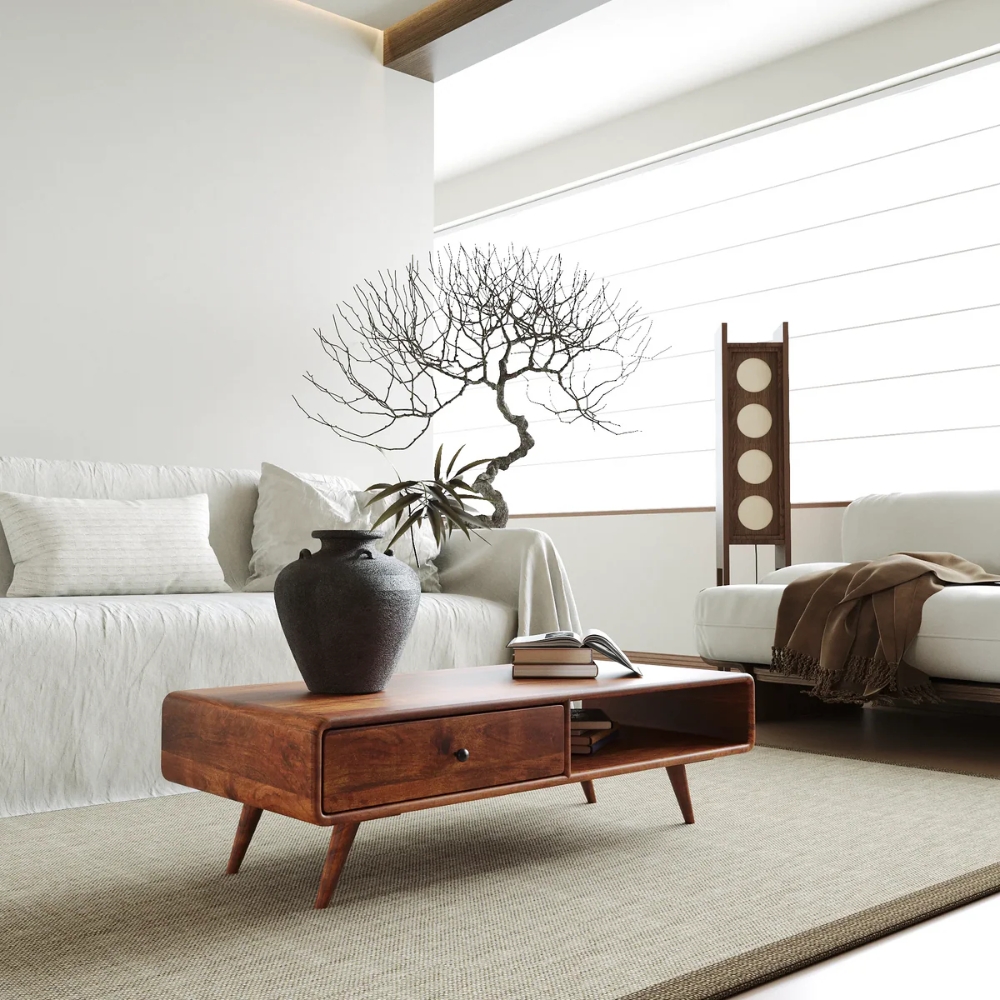
You can find the terms “solid wood,” “wooden finish,” “premium wood,” and “natural wood look” used almost equally in Indian furniture stores and on a lot of furniture websites. They’re not the same. And the difference can be the difference between 30 years of furniture and 3 years of furniture that falls apart.
The part that’s annoying? At first look, most of these differences are hard to see. If you don’t know what to look for, a well-made veneer piece can look just like solid wood in a picture or even in real life.
You don’t need any tools or special skills to use this guide to easily tell if furniture is made of real wood. Before you give them your money, you should look, touch, and ask the right questions for a few minutes.
First, What Are You Actually Comparing?
When people ask “is this real wood,” they’re usually comparing solid wood against one of these:
- Medium Density Fibreboard (MDF), wood dust that has been pressed down, and glue. It doesn’t have any grain on its own; the grain is painted on or laminated on.
- Particleboard is made from wood chips and is similar to MDF but rougher. Often found in cheap furniture.
- Thin pieces of real wood that are joined together to make plywood. It’s strong, but not the same as real wood.
- A veneer is a thin slice of real wood that is glued on top of an MDF or plywood base. On the outside it looks real, but inside it’s not.
Solid wood means the piece , or at least its main structural and visible parts , is cut from actual timber. Sheesham and Mango Wood are two of the most common solid woods used in Indian furniture, and both have very distinct grain and weight characteristics that make them easy to identify once you know what to look for.
Do This First-The Quick Checklist
Before we get into the specifics, here are five quick things you can do to any piece of furniture in less than two minutes:
- It feels heavier than imagined when you pick it up or push it.
- View the edges. Does the grain go all the way around the sides, or does it end at the surface?
- If you hit it, it will make a dull thud (solid) or an empty tap (engineered or hollow-core).
- Get a real answer like “Sheesham,” “Mango Wood,” or “Acacia” instead of a vague one like “premium wood” or “wooden finish” when you ask what kind of wood it is.
It doesn’t matter what the label says; if a piece fails three or more of these, it’s probably not straight wood. Let’s take our time with each one.
1. The Weight Test
This is the simplest test and the one most people skip.
Solid wood is dense. A drawer, a chair, even a small side table made from genuine Sheesham or Mango Wood will feel noticeably heavier than a similar-sized piece made from MDF with a veneer wrap.
How to test it:
- Stand or sit on one end of a chair or stool.
- Take out a drawer and hold it.
- If you gently push on a desk from one side, solid wood feels stable and grounded. Lighter materials, on the other hand, move around more easily.
Good luck with your first filter. It won’t tell you what kind of wood it is by itself. If something seems too light for its size, you should look into it more.
2. Grain Continuity , Check the Edges, Not Just the Front
This is the best way to tell if the furniture is made of real wood or plastic.
When something is made of real solid wood, the grain goes all the way through it, not just on top. In other words, the grain design flows naturally from the front to the edges, back, and even the bottom.
Where to look:
- The side edge of a tabletop
- The underside of a shelf
- The back of a drawer front
- Inside a cabinet door
What real solid wood looks like: the grain goes all the way around the sides and corners. Even if the tone or direction changes a little, it’s still the same content all the way through.
What veneer or engineered wood looks like: the front has a wood pattern, but the sides have a different texture, a seam, or a strip of “edge banding” that doesn’t match the grain on the front. You can sometimes tell the difference between the thin veneer layer and the core material, which is a different colour.
Why this is important for Mango Wood in particular: This natural colour difference is one of the best ways to tell if something is real, i.e. t’s very difficult to fake convincingly, and genuine Mango Wood furniture will show this variation on every surface, not just the front.
3. The Knock Test
Knock on the surface with your knuckle in the same way you would on a door.
- The sound of solid wood is dull and thick. Since the material is rigid all the way through, it takes in sound.
- Engineered or hollow-core panels make a sound that is empty and slightly resonant, sometimes like tapping on a cardboard box.
To see if it works, try it on table tops, closet sides, and drawer fronts. It’s a good sign if most of the space sounds thick and only the storage spaces sound hollow. Most likely, the “wood” you see is just a thin shell over an empty frame if the whole thing sounds hollow.
4. Natural Imperfections Are a Good Sign
This feels counterintuitive, but it’s true: slight imperfections are proof of authenticity.
Real solid wood , including handcrafted Sheesham and Mango Wood pieces , will have small knots, minor grain irregularities, and subtle colour variation from one part of the piece to another. There are no two pieces that are exactly the same.
Printed veneers and engineered wood, on the other hand, often look too similar. If the grain pattern repeats itself in a design that looks like wallpaper, that’s a good sign that it’s not real wood but a printed surface.
If you look at two pieces that are very similar and one seems “too perfect” while the other has some natural differences, the one with the differences is more likely to be real solid wood.
5. Look at the Joints
It’s almost more telling what a piece is made of than what it’s made of.
Mortise and tenon joints are a traditional and time-tested way to join two pieces together. A piece that sticks out (the tenon) goes into a slot (the mortise) that was cut into another piece that is the same size. This is most often found where a table leg meets its frame or where chair legs meet seat frames. Mortise and tenon joints are one of the best ways to join two pieces of wood together. They are also a good way to tell that the piece was made with real wood, since MDF and particleboard don’t hold cuts well and fall apart.
Dovetail joints have trapezoid-shaped notches that fit together and can usually be seen at the sides of drawers. A sign of careful work by hand.
What to be cautious about:
- Joints held together mainly with visible screws or metal brackets
- Large amounts of filler or putty hiding gaps at joints
- Any joint that feels loose or wobbly when you gently push on it
If a piece , like a solid wood dining chair , has visible mortise and tenon joinery at the legs, that’s a strong, simple signal you’re looking at genuine solid wood furniture.
6. The Thumbnail Test
Find a spot that won’t be visible in normal use , underneath a tabletop, the back of a drawer, an inner cabinet wall , and gently press your thumbnail into the surface.
- Genuine hardwood (Sheesham, Mango Wood, Acacia, Teak) will show little to no mark. These woods are dense and resist denting.
- MDF or particleboard dents more easily and may even leave a slight crumbly texture at the mark.
This is a quick, non-damaging way to get a sense of the material’s density without needing any tools.
7. Ask for the Wood Names
This might be the single easiest test, and almost nobody does it. Ask: “What wood is this made from?”
A genuine answer sounds like:
- “This is Sheesham”
- “This is solid Mango Wood”
- “It’s Acacia, plantation-grown”
A vague answer is a warning sign:
- “It’s premium wood”
- “Wooden finish”
- “High-quality timber”
- “Teak finish”
Any maker working with genuine solid wood , like the artisans behind Wooden Artistic’s handcrafted collection , can name the exact species without hesitation, because they know exactly what they’re working with. Vagueness usually means the seller either doesn’t know or is hoping you won’t ask.
8. Check the Hardware Fit
Check out the way the screws, joints, and handles are placed.
In solid wood, screws go straight into dense wood and hold strongly. You can take them out and put them back in many times without any problems.
For screws to stay in MDF or particleboard, the material around them has to be pressed together. The material around the screw can break down over time, especially if it is wet or used a lot (like on cabinet doors or drawer handles). The screw then stops sticking. An designed core can be seen if the material around a hinge or handle looks crushed, swollen, or filled in.
Why This Matters More Than the Price Tag
A higher price doesn’t always mean solid wood, and a lower price doesn’t always mean it isn’t. But generally, genuine solid wood , especially handcrafted pieces using traditional joinery like mortise and tenon joints , costs more to produce than engineered alternatives, because it requires better raw material and more skilled labour.
If a “solid wood” dining table is priced suspiciously close to MDF alternatives, that price gap should make you ask more questions , not fewer.
Frequently Asked Questions
What is the safest way to tell if furniture is made of real wood?
Make sure the grain runs all the way along the edges and undersides, do a light knock test, pick up the piece and feel its weight, and ask the seller to name the type of wood. These don’t need any tools or damage to the piece.
What is a mortise and tenon joint, and why does it matter?
This is a traditional way to join two pieces of wood together. A piece that sticks out (tenon) goes into a slot that’s been cut to match (mortise) in another piece of wood. This makes a strong mechanical connection that doesn’t need glue or screws. It’s a strong sign of the use of solid wood and skilled workmanship.
Is furniture made of mango wood real wood?
Yes. Genuine Mango Wood furniture is made from solid wood and has a unique multicoloured grain. Because the grain pattern is so unique and different, it’s one of the easiest woods to check clearly.
Can furniture made of real wood have some parts made of plywood or engineered wood?
Yes, and this isn’t always a problem. Many well-made items use plywood for cabinet or drawer backs because it’s better for the structure.
Does a higher price mean the wood is solid?
Not always, but producing real solid wood with good joinery usually costs more than making engineered alternatives. When the price of “solid wood” furniture seems eerily close to the price of cheaply made furniture, you should be wary.
Explore handcrafted solid wood furniture , including Sheesham and Mango Wood beds, bedside tables and storage cabinets, and solid wood dining chairs , at Wooden Artistic. Every piece is made from named, genuine timber, handcrafted in Jodhpur, Rajasthan.